Architecture of Modernity: Law, Economy, and the Limits of Control
Modern society's greatest achievements — specialized expertise, autonomous function systems, institutional reliability — are also the source of its most dangerous failures. Climate change, financial crises, AI governance, and pandemic response are all multi-system collisions: problems that cross the boundaries of law, economy, science, and politics simultaneously. No single system can solve them. The systems cannot merge. This course develops the diagnostic framework for understanding why.
The Capstone Course
Prerequisites: Intro to Sociology, Intro to US Law, Systems Thinking, Financial Markets, US Politics, and Ethics. This course puts everything together. Where the introductory courses teach what function systems are, this course teaches what happens when they collide — which is where all of modernity's hardest problems live.
What You Will Learn
The Architecture
Simon vs. Luhmann: two theories of complexity, two visions of what is possible. Near-decomposability vs. operational closure. Design vs. observation. The difference determines everything.
Unit 2
The Collisions
Five live crises analyzed as multi-system collisions: climate, financial meltdown, AI governance, pandemic response, and platform capitalism. Each system processes the same event through its own code — and cannot see what the others see.
Unit 9
The Limits
Habermas strikes back: can the architecture be redesigned, or only inhabited? Deliberative democracy, polycentric governance, or reflexive observation — students take and defend a position.
Unit 16
Curated Video Library
6 curated videos to explore — plus 16 more matched to individual units inside the course
Adam Curtis's BBC documentary traces the genealogy of systems thinking from Ayn Rand's libertarianism through cybernetics into Silicon Valley's vision of self-organizing networks that could replace political authority. For a course on the architecture of modernity, this documentary is essential context: the systems-theoretical framework Luhmann developed in Germany and the cybernetic framework that shaped American technology emerged from overlapping but distinct intellectual sources, and the differences matter. Curtis's argument -- that California technologists' cybernetic dream produced not equilibrium but financial deregulation and the Asian crisis -- is a Luhmannian case study avant la lettre: structural coupling between economic and political systems failed because both systems mistook their own outputs for empirical truth. Students who watch this before engaging Unit 2 (Simon vs. Luhmann) will see the intellectual stakes of the course's foundational distinction: cybernetics offers design science, Luhmann offers description. The documentary already serves Systems Thinking and Financial Markets in this curriculum; its presence in Architecture of Modernity reveals the cross-curricular spine.
Bruno Latour delivers the Parliament of Things argument in person -- the framework Unit 16 evaluates as one of three responses to functional differentiation's collision crises. Latour's central move is to refuse the modern division between nature and society, arguing that climate change, pandemics, and AI cannot be governed by political institutions that recognize only human actors. The Parliament of Things would extend representation to non-human entities (rivers, ecosystems, atmospheres, viruses), not as romantic gesture but as structural necessity. For students who reach Unit 16 with Luhmann's framework already internalized, Latour's lecture poses the hardest question the course can ask: is functional differentiation a permanent feature of modernity that we must learn to inhabit (Esposito's reflexive observation), or is it a historical artifact that can be redesigned (Latour's parliament)? The lecture takes ninety minutes and earns every one of them.
This is the primary source. Niklas Luhmann -- the theorist whose framework is the spine of every unit in this course -- delivers a ninety-eight-minute lecture in English at the LSE in 1995. He explains functional differentiation, operational closure, structural coupling, and the binary codes of function systems in his own voice, pacing, and idiom. For a course built on Luhmann, hearing him think through the framework rather than reading a textbook summary changes the relationship to the material: this is not received doctrine but a working theorist defending and developing his ideas in real time. Luhmann died in 1998, so this lecture is one of the few opportunities to encounter him as a living interlocutor rather than a posthumous source. Students who watch this once will internalize a vocabulary -- 'operational closure,' 'cognitive openness,' 'symbolically generalized communication media' -- that the next sixteen units will deploy as already-shared currency. Watch this first, even before Unit 1.

Michael Sugrue's lecture on Habermas is the best forty-four-minute introduction to critical theory available on YouTube. He traces the Frankfurt School lineage through Adorno and Horkheimer to Habermas's communicative action framework, then shows how the lifeworld/system distinction sets up the colonization thesis Unit 14 analyzes in detail. Sugrue's pedagogical clarity (he was a Princeton professor whose lecture series went viral posthumously) makes Habermas accessible without dumbing him down -- the same intellectual honesty the course demands. For students who will encounter Habermas as Luhmann's principal antagonist throughout the course, this lecture establishes the philosophical commitments that make the Habermas-Luhmann debate central to Units 6, 13, and 14: is communicative rationality a possible refuge from system imperatives, or has the lifeworld already been colonized? Sugrue presents Habermas's strongest case so students can evaluate it fairly when Luhmann's counter-argument arrives.
Katharina Pistor delivers the full Code of Capital argument in this sixty-eight-minute Columbia University lecture. She demonstrates how four legal modules -- contract law, property law, corporate law, and trust law -- constitute capital rather than merely regulate it, with the four properties (priority, durability, universality, convertibility) that transform ordinary assets into wealth-generating instruments. This is the framework that drives Units 4 and 8, and Pistor's primary-source presentation lets students hear a working legal scholar build the argument from historical evidence (the dirt that became capital) to contemporary examples (derivatives as legal constructions). Crucially for a Luhmannian course, Pistor's framework is itself a sophisticated example of structural coupling between law and economy: she shows how the legal system constitutes the economic system without merging into it. Students who absorb this lecture will arrive at Unit 8 with the Pistor framework already operational, ready to deploy it against the financial crisis case in Unit 10 and the platform capitalism analysis in Unit 13.
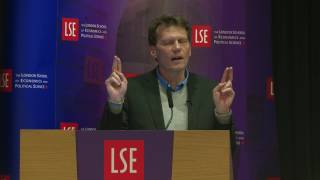
Hartmut Rosa presents the full social acceleration framework in this ninety-minute LSE lecture: three interlocking accelerations (technological, social change, pace of life), the dynamic stabilization that requires perpetual growth to maintain stability, and the resonance theory that diagnoses what acceleration costs us. Unit 15 builds on Rosa's framework as the central diagnosis of why functional differentiation produces the acceleration trap, and this lecture is the most rigorous video presentation of his argument available. The Q&A is particularly valuable: audience members push back on whether deceleration is possible, and Rosa's responses model how a serious theorist defends a pessimistic argument without collapsing into despair. For students who arrive at Unit 15 thinking they understand acceleration as a vague cultural mood, Rosa's lecture reveals it as a structural property of the architecture they have been studying for fourteen units.
Explore These Channels
Carefree Wandering produces the most rigorous Luhmann content on YouTube outside the academic archives. The channel's two-part Luhmann series -- 'A Super Theory of Society' and 'Function, Code, and Ontology of the Media' -- bridges Luhmann's notoriously difficult prose to accessible video format without sacrificing the technical apparatus. For a course where Luhmann is the central theorist but his primary texts are nearly impenetrable to first-time readers, Carefree Wandering is the indispensable bridge. The channel also covers Heidegger, Nietzsche, and contemporary continental philosophy with the same care, providing context for the German philosophical tradition that produced Luhmann's framework.
INET (Institute for New Economic Thinking) hosts the highest-quality video content on heterodox economics and political economy available anywhere. For Architecture of Modernity, INET is the primary source for Pistor (Code of Capital), Mehrling (money view), Blyth (political economy of crisis), and the broader project of rethinking economics through structural and historical lenses. The channel's editorial discipline -- short tightly-edited explainers paired with full conference lectures -- matches the course's two-tempo demand: students need both the framework summary and the deep dive. Multiple INET videos already serve Financial Markets and Ethics in this curriculum; their use in Architecture of Modernity shows how Unit 8's law-as-medium framework connects to Unit 10's financial crisis analysis through the same scholars.
FRONTLINE documentaries are the single best source of long-form case studies showing system collisions in action. The course's collision units (9-13) demand evidence of functional differentiation failing under stress -- climate negotiations breaking down, financial systems freezing, AI governance lagging the technology, pandemic response fragmenting across sovereignty boundaries, platform capitalism colonizing the public sphere -- and FRONTLINE has produced major documentaries on each. 'Age of Easy Money' (financial crisis), 'In the Age of AI' (AI governance), 'America's Great Divide' (political polarization) all map directly to AoM units. For a Luhmannian course that argues system collisions cannot be observed from inside any single system, FRONTLINE's investigative method -- interviewing decision-makers as institutions transform -- provides the empirical evidence the framework demands.
Then & Now produces philosophy explainers with the editorial restraint and historical depth that the AoM course demands. Lewis Waller's videos on Habermas, Foucault, Arendt, and the Frankfurt School trace intellectual lineages without flattening them into easy summaries. For Unit 14 specifically, Then & Now's 'Habermas: Structural Transformation of the Public Sphere' is the best short-form introduction available -- 250,000 views worth of evidence that careful philosophical exposition can find a YouTube audience. The channel also covers Marx, Nietzsche, and contemporary critical theory, providing the broader intellectual context that makes the Habermas-Luhmann debate legible as a continuation of the Frankfurt School / systems theory split that defines twentieth-century German social thought.