Cultural Anthropology
A famous 1956 paper described a tribe obsessed with body ritual — shrine rooms in every dwelling, mouth-rites performed twice daily. The tribe was Americans; the shrine room is your bathroom. Ten units that use the study of human cultures as a mirror: your kinship, your gifts, your medicine, and your rituals become specimens alongside everyone else's.
What You Will Learn
Your Culture Is the Specimen
Every unit runs the Nacirema mirror trick: the same instruments applied to distant lifeways and to prom, Venmo, graduation, and the family reunion. Defamiliarization is the discipline's core move — and this course's.
How Anthropologists Know
Fieldwork taught as epistemology: participant observation, thick description, and the discipline's honest reckonings — Mead versus Freeman, WEIRD samples, colonial entanglements. Methods and their failures, together.
Units 2-3
The Ethnosphere's Stakes
Wade Davis's wager taken seriously: languages and lifeways are disappearing this decade, and each is a distinct answer to what it means to be human. The final unit asks what the reader's generation does about it.
Unit 10
Curated Video Library
10 curated videos to explore — plus 19 more matched to individual units inside the course

A full-length professional documentary ('The Amazon Code,' produced by Essential Media & Entertainment with ABC Australia, Smithsonian Networks, and ARTE France) on exactly the controversy Unit 4 insists on handling honestly rather than picking a side: Daniel Everett's claims about Pirahã's absent number vocabulary and contested recursion-free grammar. Watch for how the film's own framing — 'a structure that defies conventional grammar,' 'challenges fundamental ideas about human cognition' — runs slightly ahead of where the unit's Key Debates section says the field actually stands, which is itself a useful exercise: have students flag the moments where the documentary asserts more certainty than Everett's own critics would grant. This is the strongest available video treatment of the single most contested case in the unit.
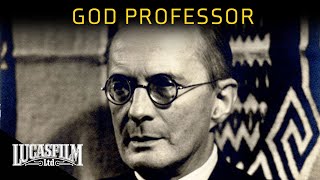
Produced for The Adventures of Young Indiana Jones educational DVD series (George Lucas, executive producer), this half-hour documentary tells Malinowski's actual biography — the diplomatic accident of internment-era fieldwork Unit 3 opens with, the tent in the Trobriand village, the founding of participant observation as method. It is a genuinely unusual find: a studio-produced historical documentary about an anthropologist's life and method, rather than a lecture summarizing his theory. Watch for how the film handles Malinowski's own private diaries (published posthumously, and considerably less flattering than Argonauts' polished authorial voice) — a direct, ready-made complication for Unit 3's Writing Culture section on whose voice an ethnography actually represents.
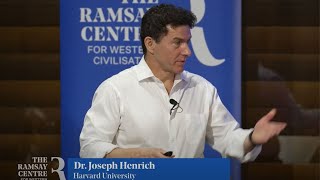
Henrich delivering the WEIRD argument in his own voice, at full lecture length, is the closest this library gets to a primary source for Unit 2. The talk opens with the same move the unit opens with — global variation on conformity, guilt, patience, trust, and analytic reasoning, with WEIRD populations sitting at the statistical edges rather than the center — before pivoting into the more ambitious historical argument from Henrich's 2020 book, which Unit 2's Key Debates section flags directly as the more contested extension of the original 2010 paper. Assign the first twenty-five minutes for the core WEIRD claim; the back half, on medieval Church marriage policy dismantling kin-based institutions, previews Unit 5's kinship material from an entirely different angle. Eighty-four minutes is long — tell students exactly where to stop if class time is tight.
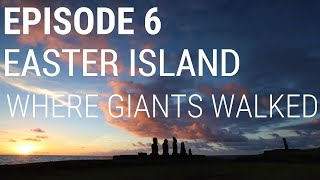
Fall of Civilizations was named directly in the course plan's media anchors for Units 9 and 10, and the Easter Island episode is the single strongest fit available on the channel: a complete-society case study in isolation, subsistence strategy, and the contested question of ecological collapse, narrated with recorded ancestral chants from Rapa Nui's own Toki School of Music. Assign after Unit 9's subsistence-strategy material — the episode is a worked example of Boserup-style population pressure meeting a fixed island resource base, and the moai-carving economy is exactly the kind of prestige-and-labor system Unit 6's potlatch material trained students to read. It also previews Unit 10's ethnosphere stakes directly: Rapa Nui's own language and navigational knowledge are exactly what the course's closing unit argues is at risk everywhere. Long at 103 minutes — assign in segments or as a take-home.
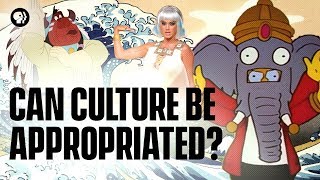
PBS Digital Studios' treatment gets directly at the definitional problem Unit 10 uses Rogers's four-part typology to solve: the video surveys competing popular definitions of appropriation, walks through the 1973 Academy Awards Sacheen Littlefeather case as a worked historical example, and lands on exactly the question the unit's Rogers section asks — who holds power in the exchange, and was consent possible. Assign after the unit's own Rogers typology as a test case: have students re-sort the video's own examples into Rogers's four categories (exchange, dominance, exploitation, transculturation) rather than the single undifferentiated 'appropriation' bucket the video itself uses, which is precisely the analytical upgrade the unit argues the typology provides.
Four and a half minutes on exactly the evidence Unit 8 insists on stating honestly rather than overselling: placebo effects are real and measurable for some outcomes (pain, subjective symptoms) and absent for others, with a real, biologically documented mechanism (endogenous opioid release) behind at least part of the effect. Assign before the unit's open-label placebo section as the fast baseline, then have students identify exactly where the unit's treatment goes further than this video does — the open-label trials, where patients who know the pill is inert still improve, are the genuinely surprising finding this video doesn't cover and the unit spends real space on.
Four minutes, animated, and precisely aligned with Unit 6's opening move: the video's central example — what if thanking your aunt for a sweater meant showing up in a week with a better gift — is the exact obligation-to-reciprocate logic Mauss's three-part framework formalizes. The video's closing reference to the potlatch (named directly in its own tags) sets up Unit 6's Northwest Coast material without stealing its thunder. Assign first, before the unit's own denser Sahlins-and-kula material, as the fast comprehension check the TED-Ed format is built for.

Frank Heimans's 1987 documentary is the primary audiovisual record of the controversy Unit 3 treats as the discipline's clearest lesson in self-correction: Derek Freeman's 1983 challenge to Mead's 1928 Samoa fieldwork, presented with interview footage from both camps rather than a secondhand summary. Watch for exactly what the unit's Key Debates section flags as easy to miss — the film gives real screen time to the later, more measured reassessment, not just the two original combatants, which is the material needed to avoid the 'Mead was simply wrong' shorthand the unit spends most of its length correcting. Assign after the unit's own account of the dispute, as the primary-source check on a controversy the text necessarily compresses.
Davis's 2008 TED talk turns from the ethnosphere's breadth to a single, deeply observed case — the Elder Brothers, Kogi descendants of pre-Columbian Sierra Nevada civilization, whose entire spiritual practice is organized around maintaining cosmic balance through ritual. This is the closest available video companion to Unit 7's argument that ritual is a society's machinery for managing transformation and uncertainty: watch for Davis's account of Kogi priests trained from childhood in total darkness specifically to perceive the world differently, a rite of passage as extreme as anything Turner documented among the Ndembu. Davis is also this course's named voice lead for its openings, so the register itself — concrete place, sensory detail, the stakes of a vanishing lifeway — is worth studying as much as the content.
Davis's best-known talk is the direct video source for this course's opening and closing wager, quoted throughout the unit texts from The Wayfinders: other cultures are not failed attempts at being you, they are unique manifestations of the human spirit. Watch for the specific ethnosphere arithmetic Unit 10 opens with — language extinction rates, the erosion Davis argues exceeds the biosphere's own well-publicized losses — delivered with the photography and fieldwork stories that give the abstract argument concrete stakes. This is the single video every other showcase entry in this library implicitly answers to; assign it in Unit 1 as a preview and again in Unit 10 as the closing argument in full.
Explore These Channels
Wade Davis's two TED lectures are this course's central video throughline, named directly in the course plan's media anchors for Units 1, 9, and 10; TED-Ed's short explainers (gift economy, placebo, Polynesian wayfinding) supply the fast, animated comprehension checks the course assigns before its own longer arguments across Units 6, 8, and 9.
SLICE's full-length 'Amazon Code' documentary on the Pirahã was the strongest available treatment found in a broad search for Unit 4's linguistic-relativity material — a professionally produced international co-production (Essential Media, ABC Australia, Smithsonian Networks, ARTE France), not a pre-named anchor channel, included because it was the best video for the unit's most contested case.
Hosts 'Bronislaw Malinowski: God Professor,' a studio-produced historical documentary made for the Young Indiana Jones educational series — an unexpected but genuinely strong source for Unit 3's participant-observation material, found through broad search rather than the course's named anchor list, and stronger than any lecture-format summary of Malinowski's method.
PBS Digital Studios' 'Origin of Everything' treatment of cultural appropriation is a well-sourced, citation-heavy explainer that gives Unit 10's Rogers typology a real test case (the 1973 Academy Awards Sacheen Littlefeather incident) to re-sort using the unit's own four-part framework.
Prof Alan Macfarlane - Ayabaya
Macfarlane is this course's second named voice lead, and his Cambridge archive is the professor-tier resource the course plan's media anchors flag specifically for Units 3 and 5 — filmed classroom lectures on kinship theory delivered at the patient, comparative, question-driven pace the unit texts borrow their register from. The channel also hosts 'Strangers Abroad,' the 1990s television series on Evans-Pritchard and Azande witchcraft that supplies deep background for Unit 7.
Named directly in the course plan's media anchors for Units 9 and 10. The Easter Island episode anchors this library's showcase; the channel's broader catalog of complete-society case studies (subsistence collapse, isolation, cultural loss) is useful supplementary viewing wherever a unit needs a full-length narrative treatment of a society under ecological or colonial pressure rather than a short explainer.