Ethics & Moral Philosophy
You already have a moral philosophy — you just haven't examined it yet. That's dangerous. This course puts you in the room where the decision is being made and asks: what should we do, and who gets to decide?
NOT a Philosophy Survey
This course doesn't list ethical theories — it makes you use them. Every unit presents at least two genuinely opposing moral positions that reasonable people hold. Dilemmas are not resolved neatly. You will leave uncomfortable. That's the point.
What You Will Learn
The Foundations Nobody Agrees On
Pull the lever? Harvest the organs? Same math, opposite intuitions. From Bentham's preserved corpse to Kant's absolute rules — the moral toolkit humanity has built, and where each tool breaks.
Unit 1
The Hardest Problems Right Now
Cambridge Analytica, ventilator triage in Bergamo, algorithmic sentencing — applied ethics where real people face real consequences and every framework produces different survivors.
Unit 7
Living With Moral Complexity
When is breaking the law the right thing to do? Is opposing FGM cultural imperialism? Why are you not as good as you think? Ethics is not a spectator sport.
Unit 12
Curated Video Library
8 curated videos to explore — plus 15 more matched to individual units inside the course
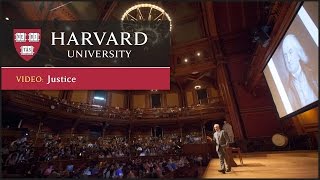
This is the single most-watched lecture in the history of moral philosophy, and it earns every one of its 41 million views. Sandel opens the Justice course exactly where our curriculum opens -- with the trolley problem -- and within minutes has a thousand Harvard students arguing with each other about whether it is permissible to push a fat man off a bridge to save five lives. The lecture makes visceral what the curriculum teaches analytically: that our moral intuitions conflict with themselves, and that noticing the conflict makes it worse, not better. When a student named Andrew tries to explain why pushing feels different from turning a lever and stammers 'it doesn't really sound right saying it now I'm up here,' Sandel lets the silence do its work. That moment -- the moment a confident intuition dissolves under scrutiny -- is the pedagogical engine of the entire course. Students who watch this before reading Unit 1 will arrive already destabilized, which is exactly where Philippa Foot and Judith Jarvis Thomson need them to be.

Sandel takes Bentham's utilitarianism and tests it against two real-world cost-benefit analyses that students will not forget: Philip Morris calculating that Czech citizens who die from smoking save the government $1,200 each in pension and housing costs, and Ford deciding not to fix the Pinto's exploding fuel tank because 180 deaths at $200,000 each cost less than $137 million in safety improvements. When a student named Julie says 'I don't believe I could give a number -- this sort of analysis shouldn't be applied to issues of human life,' Sandel has her exactly where Bentham would want her: forced to articulate whether the objection to cost-benefit analysis is that the number is too low, or that the very act of assigning a number degrades something about human dignity. This is the essential companion to Unit 2, which traces the felicific calculus from Bentham's preserved corpse through QALYs to effective altruism.

This is the lecture where Sandel makes Kant accessible -- no small feat for the most difficult philosopher in the course. He opens by noting that Kant got his first job at sixteen as an unsalaried lecturer 'paid on commission based on the number of students who showed up,' then pivots to Kant's central insight: that the moral worth of an action depends not on its consequences but on its motive. Sandel uses a Sprite advertising slogan -- 'Obey Your Thirst' -- to illuminate Kant's distinction between autonomy and heteronomy, and the lecture hall erupts when students realize that choosing between Sprite and Pepsi is not actually a free choice at all. The discussion of the categorical imperative builds to a student named Kelly explaining that 'pure reason' guarantees all rational beings will arrive at the same moral law, which is the exact argument Unit 3 develops through Kant's Groundwork. This lecture belongs in the showcase because it is the gateway to deontological ethics for students who have never read a word of Kant.

In just seven minutes, this BBC segment stages the hardest possible test of Kantian ethics: the real-life case of Magnus Gaffgen, who kidnapped an eleven-year-old boy in Frankfurt and refused to reveal the child's location. When the deputy police chief threatened torture, Gaffgen confessed -- but the boy was already dead. The police chief was prosecuted for violating the kidnapper's dignity. Sandel lets the panelists wrestle with whether torturing a confessed kidnapper to save a child violates the categorical imperative, and a utilitarian pushes back: 'What about respect for the dignity of the child locked up somewhere, going to die slowly from hunger and thirst?' A war correspondent delivers the counterpoint from direct experience: 'I speak to people who were victims of this kind of thinking. It's so evident why you need Kantian thinking as the guidance per se.' This compressed, high-stakes debate is the perfect companion for Unit 3's murderer-at-the-door problem and Unit 11's examination of torture in wartime.

Sandel takes his 'What Money Can't Buy' argument into the sacred space of St Paul's Cathedral and opens with a catalogue of things money can now purchase that will make students uncomfortable: a prison cell upgrade in Santa Barbara for $82 a night, $300 cash to drug-addicted women willing to be sterilized, and advertising space on college students' foreheads for four pounds twenty an hour (a sponsorship 'praised as an extension of the sandwich board, but a bit more organic'). He then articulates the thesis that animates Unit 9: 'We've drifted from having a market economy to becoming a market society. The difference is this: a market economy is a tool. A market society is a place where everything is up for sale.' The audience participation format -- with live polling and Twitter questions -- models exactly the kind of public moral reasoning the course demands. This is the ideal showcase video for the commodification unit because Sandel names the two objections to markets (fairness and corruption) that the unit systematically develops.
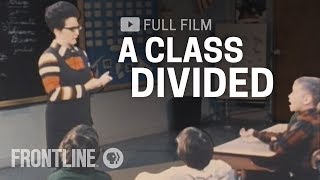
The day after Martin Luther King Jr. was assassinated, third-grade teacher Jane Elliott told her students in Riceville, Iowa, that blue-eyed children were superior to brown-eyed children. Within fifteen minutes, she 'watched wonderful, thoughtful children turn into nasty, vicious, discriminating little third-graders.' Brown-eyed children who had been reading at grade level suddenly couldn't get through a card pack; the next day, when the roles reversed, brown-eyed children completed the same exercise in half the time. This FRONTLINE documentary follows Elliott's students to their high school reunion fourteen years later and captures the lasting moral education of experiencing discrimination from the inside. It connects to multiple units: the psychology of moral behavior in Unit 14, the question of who counts in Unit 5, and the relationship between moral knowledge and moral action in Unit 15. For a course that asks whether studying ethics makes you more ethical, this documentary provides sobering empirical evidence that experiential moral education can permanently reshape how people treat others.
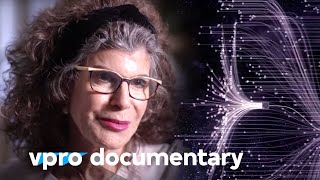
Zuboff -- sometimes called 'the Karl Marx of our time' -- lays out the architecture of surveillance capitalism in fifty riveting minutes, starting from her central provocation: 'We think that the only personal information they have about us is what we've given them. What's really happening is that we provide personal information but the information that we provide is the least important part.' She traces how Google discovered that residual data once dismissed as 'digital exhaust' harbored rich predictive signals, and how the business model shifted from improving services to manufacturing predictions about human behavior and selling them to the highest bidder. The documentary's most chilling example -- a supermarket's algorithm discovering a teenage girl was pregnant before her father knew, through her switch from fragrant to neutral shampoo -- makes the abstract concept of 'behavioral surplus' viscerally concrete. This is essential viewing for Unit 6, which builds on Zuboff's framework to ask whether meaningful consent is possible when reading a year's worth of privacy policies would take 76 working days.

This concise video essay presents Bonhoeffer's provocative thesis -- that stupidity is more dangerous than evil because it is 'impervious to intellectual engagement' and 'resists awareness, self-correction, and the capacity for change' -- and connects it directly to Hannah Arendt's concept of the banality of evil. The video traces how Bonhoeffer, a German theologian and resistance fighter executed by the Nazis, developed his theory from firsthand observation of 'how the passive compliance of ordinary citizens became a central component of the regime's success.' The link between Bonhoeffer and Arendt illuminates Unit 14's examination of moral psychology: both thinkers argue that the greatest moral danger comes not from people who choose evil but from people who fail to think critically about their participation in systems of harm. For students who have spent thirteen units developing ethical frameworks, this video poses the hardest question of all: what happens when people simply refuse to engage with moral reasoning?
Explore These Channels
Harvard University
Michael Sandel's Justice course is the most-watched university course in history, with over 41 million views on the opening episode alone. The twelve full-length lectures map directly onto the ethics curriculum: Episode 1 stages the trolley problem, Episodes 2-3 develop utilitarianism, Episodes 5-7 cover libertarianism and Kantian deontology, Episode 8 introduces Rawls, Episodes 9-10 bring Aristotle and virtue ethics, and Episodes 11-12 address community, solidarity, and same-sex marriage. Sandel's Socratic method -- putting students on the spot, letting silences linger, circling back to challenge their arguments -- models the exact pedagogical approach this course uses. The BBC and NHK companion clips extend the lectures into shorter, more focused debates on torture, fair pay, and collective responsibility.
FRONTLINE's investigative documentaries bring moral philosophy out of the classroom and into the world. Their films on discrimination (A Class Divided), campus speech (Crisis on Campus), and technology ethics provide the kind of case-study material that bridges abstract ethical theory and lived moral experience. For a course that asks students to apply utilitarian, deontological, and virtue frameworks to real dilemmas, FRONTLINE provides the dilemmas -- rigorously documented and impossible to dismiss as hypothetical.
St Paul's Cathedral / New Economic Thinking
This playlist collects Sandel's book-tour lectures and debates from 2012, when What Money Can't Buy was published. Each event stages the commodification argument in a different venue -- St Paul's Cathedral, the University of Warsaw, a TED stage, the Centre for International Governance Innovation -- with different audiences and different provocations. The variety of formats (cathedral debate, academic lecture, short TED talk) gives teachers multiple entry points for Unit 9, and the Chicago Ideas version at 33 minutes is an efficient classroom screening option.