Evolutionary Biology: Deep Time and the Logic of Life
The 4.2-billion-year experiment that produced every living thing — from alkaline vents on a young Earth to the sixth mass extinction. Five scientists guide a journey through deep time, tectonic upheaval, and the molecular evidence that all life shares a single ancestor.
NOT a Memorization Course
This course is organized chronologically through deep time, but each unit builds conceptual frameworks — natural selection, genetic drift, homology, convergence — that make the next chapter comprehensible. The science comes first (Units 1-12). The ethics and the present come after, grounded in 14 units of evidence.
What You Will Learn
The 4.2-Billion-Year Experiment
From alkaline vents to CRISPR — trace the unbroken chain of ancestry connecting every living thing. Nick Lane and Andrew Knoll guide you through the first three billion years most biology courses skip.
Unit 3
Five Extinctions, One Warning
Five times, Earth lost more than 75% of its species. Each time, survivors rebuilt. The sixth is happening now at 100-1,000x the background rate — and it has a known cause.
Unit 8
Your Inner Fish, Your African Genome
Your hiccups trace to a 375-million-year-old neural circuit. Your genetic diversity traces to Africa. Shubin and Tishkoff reveal the deep homology connecting you to every organism that ever lived.
Unit 10
Curated Video Library
6 curated videos to explore — plus 16 more matched to individual units inside the course
Walter Alvarez is the Berkeley geologist who, with his Nobel-laureate physicist father Luis Alvarez, proposed in 1980 that an asteroid impact killed the dinosaurs at the end of the Cretaceous. This 55-minute UCTV lecture is Walter Alvarez looking back at the impact hypothesis 27 years after he and his father proposed it, walking through the original iridium-anomaly evidence, the discovery of the Chicxulub crater that confirmed the prediction, the geophysical models of what the impact's effects would have been, and the broader transformation in earth science that the impact theory's acceptance triggered. For Unit 8 (The Big Five) this is the canonical primary source -- the scientist who proposed the theory, decades later, with the benefit of all the corroborating evidence accumulated since. The pedagogical move that distinguishes Alvarez's lecture from popular treatments: he models how a hypothesis becomes a theory becomes a textbook fact, and what each transition required in terms of independent evidence. For students learning to evaluate scientific arguments, watching the originator narrate that arc is the most valuable possible demonstration of how science actually works.
Sean B. Carroll is the molecular biologist whose work on Hox genes and evo-devo (evolutionary developmental biology) is the conceptual bedrock of Unit 6's analysis of the Cambrian explosion and the deep-homology argument that runs through Units 10, 12, and 14. This 72-minute Vanderbilt University lecture is the most rigorous primary-source presentation of the evo-devo framework available on the open internet. Carroll walks through the experimental evidence (the Hox gene clusters that pattern body plans across distantly related species, the fly-wing-to-vertebrate-limb deep homology, the regulatory mutations that transform existing genes into new functions) and shows how this evidence resolved a long-standing puzzle: how could the Cambrian explosion produce so many new body plans so quickly without inventing new genes. The answer -- new ways of regulating old genes -- is the unit's central insight. For a course teaching evolution as a structured argument from evidence, Carroll's lecture models exactly the move from molecular data to conceptual reframing that the course is asking students to internalize.
Svante Pääbo won the 2022 Nobel Prize in Physiology or Medicine for sequencing the Neanderthal genome and discovering the Denisovan lineage from a single finger bone, and this 97-minute National Human Genome Research Institute lecture is the most comprehensive primary-source presentation of his work available on the open internet. Pääbo walks through the technical apparatus of ancient DNA recovery (the contamination problems, the fragmentation challenges, the statistical methods for distinguishing endogenous DNA from environmental noise), the substantive findings (every non-African human carries roughly 1-4% Neanderthal DNA, the Denisovan contribution to modern Tibetans, the deep-population structure of African genomes), and the methodological transformation in human evolutionary biology that ancient DNA has produced. For Unit 11 (The African Genome), this is the indispensable primary source -- Pääbo is the founding figure of paleogenomics and his lecture is the most rigorous open-internet treatment of how ancient DNA has rewritten the human evolutionary story. The NIH venue gives the lecture the Q&A texture that makes it pedagogically valuable: research scientists pushing back on specific methodological questions.
Nick Lane is the central biochemical thinker in this course -- his work appears explicitly in Units 1, 2, 3, and 5 -- and this 34-minute Royal Institution lecture is the ideal entry point. Lane walks through the central question of his life's work: why life on Earth has the specific architecture it has (mitochondria-powered eukaryotic complexity emerging exactly once in four billion years, the universal energy currency of ATP, the proton gradients that power every cell), and what those features tell us about whether complex life is a near-inevitable outcome of planetary chemistry or a freak accident that almost did not happen. For a course whose first five units construct exactly this argument from the origin of metabolism through the eukaryotic merger, Lane's lecture is the unifying primary source. The Royal Institution venue matters: this is not a TED talk but a serious academic lecture in front of a scientific audience, with the Q&A preserved. Watch this once before Unit 1 -- the framework Lane lays out becomes the conceptual ground on which the next four units build.
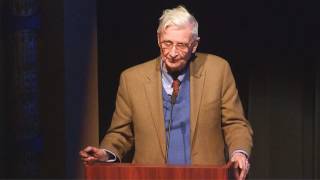
Edward O. Wilson was the Harvard biologist whose work on biogeography, sociobiology, and conservation defined more of late-twentieth-century evolutionary biology than any other single figure, and the Half-Earth proposal he made in his last decade is the policy capstone of his life's work. This 47-minute Biodiversity Days lecture is the primary source for the proposal: setting aside half the Earth's surface as protected habitat to preserve roughly 85% of species diversity, the empirical argument from species-area relationships (the same theory of island biogeography Wilson and Robert MacArthur developed in the 1960s), and the political and economic arguments for why half is both ecologically necessary and politically achievable. For Unit 13 (The Sixth Extinction) and Unit 16 (Deep Time and Human Responsibility), Wilson's lecture is the moral synthesis the course's empirical chapters build toward. Wilson died in 2021, and this lecture is one of the few full-length primary-source presentations of the Half-Earth framework in his own voice. Watch as the conceptual bridge from the course's analysis of mass extinction to its closing question of human responsibility.
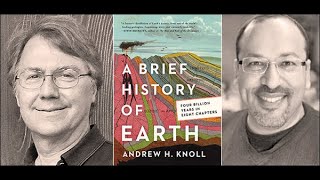
Andrew Knoll is the Harvard paleobiologist whose work on the early evolution of life and on mass extinctions appears in Units 4, 8, 9, 13, and 16 of this course -- five of the sixteen units rest on his research. This 62-minute Harvard Science Book Talks lecture is the best primary-source overview of the four-billion-year arc the course traces, organized around the eight chapters of his book A Brief History of Earth. Knoll covers the origin of life, the Great Oxygenation Event, the Cambrian explosion, the mass extinctions, the rise of complex ecosystems, and the contemporary biodiversity crisis -- the same conceptual sequence the course follows, in the same chronological order. The pedagogical advantage of pairing the course with this lecture is that students hear the entire arc told once by the scientist whose research informs five separate units, which gives them the integrative frame the course's unit-by-unit structure cannot fully provide. Watch this once near the start of the course (after Unit 1) -- it provides the geological timeline within which everything else makes sense.
Explore These Channels
The Royal Institution is the 226-year-old London scientific society whose Friday Evening Discourses have introduced major scientific findings to the public since Faraday. The RI YouTube channel preserves the lecture format -- a single working scientist, an attentive scientific audience, an extended Q&A -- which is exactly the pedagogical format this course requires. Nick Lane has delivered three major RI lectures (origin of life, the Krebs cycle, the vital question) that anchor the course's first five units, and the channel's broader catalog includes Neil Shubin on Tiktaalik, Adam Rutherford on genetics and race, and the major figures in contemporary evolutionary biology. For students who want to follow any unit's primary source deeper, the RI channel is the most rewarding rabbit hole in academic biology on YouTube.
PBS Eons is the long-form paleontology and deep-time channel that has done more than any other YouTube source to popularize the geological and evolutionary history this course traces. The channel's editorial signature -- 10-15 minute episodes with original animation, primary-research citations in the description, and host scientists who are themselves working paleontologists -- makes it the indispensable wonder-bridge resource for the course's deep-time units (4, 6, 8, 9). Eons' longer-form 'Could You Survive the Cambrian Explosion?' and 'Could You Survive the K-Pg Extinction?' episodes are 45-60 minute deep dives that match the course's pedagogical depth without sacrificing the visual storytelling that makes deep time feel real. For students who find the textual primary sources demanding, Eons is the bridge that makes the conceptual content land before the technical content does.
Journey to the Microcosmos is Hank Green's microscopy channel that pairs phase-contrast microscope footage of living microorganisms with editorial scripts about the evolutionary biology, biochemistry, and ecology of microbial life. The channel's pedagogical contribution to this course is hard to overstate: students reading about cyanobacteria's role in the Great Oxygenation Event or the endosymbiotic origin of mitochondria can watch the actual living organisms whose ancestors performed those evolutionary feats. The channel's 'Complicated Legacy of Lynn Margulis' episode is the most thoughtful short-form treatment of Margulis's career available -- it covers both her endosymbiotic theory's vindication and her later embrace of fringe positions, modeling the kind of nuanced engagement with scientific reputation the course's Unit 5 framing requires. For Units 4 and 5 specifically, Journey to the Microcosmos provides the visual texture that makes the theoretical content feel embodied.
University of California Television is the public-affairs and lecture channel of the UC system, and it is one of the most underused academic-lecture archives on YouTube. For this course, UCTV hosts the Walter Alvarez 'Death of the Dinosaurs: 27 Years Later' showcase lecture, the Neil Shubin 'Your Inner Fish: Conversations with History' interview that anchors Unit 10, and the UC San Diego CARTA series with Sarah Tishkoff on local human adaptation. The channel's editorial discipline -- full-length lectures with intact Q&A, no superimposed editorial overlay, transcripts available -- matches the course's pedagogical contract. UCTV is also the channel that hosts the Nobel-laureate lecture archives from UC Berkeley, UCSF, and UCSD, which makes it the most efficient single source for primary-research presentations from the West Coast biology and earth science faculties.