Critical News Literacy
Understanding media in the digital age. A curriculum for navigating news, identifying misinformation, and becoming a critical consumer of information.
How News & Algorithms Manufacture Reality
Audio Overview — Journalism & Media Literacy
What You Will Learn
Source Evaluation
Learn systematic methods for evaluating sources, including lateral reading and the SIFT method for verification.
Bias & Framing
Identify types of media bias and understand how framing shapes our understanding of events.
Digital Literacy
Navigate social platforms, recognize misinformation, and understand algorithmic curation.
Curated Video Library
8 curated videos to explore — plus 13 more matched to individual units inside the course
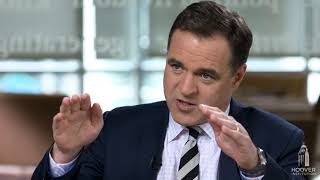
Ferguson opens this Hoover Institution conversation with a confession: he moved to Stanford and discovered that Silicon Valley believed 'history began with the Google IPO,' and everything before that was 'the Stone Age.' His book argues that networks and hierarchies have been competing for power since the Illuminati and the Reformation, and that the current era -- in which platforms have disrupted the hierarchical gatekeeping of traditional media -- is not unprecedented but rhymes with earlier periods when new communication technologies destabilized established power. Ferguson's specific discussion of how the printing press enabled Luther to go viral, how conspiracy theories fill the vacuum left when network structures evade historical scrutiny, and how Facebook and Twitter recapitulate patterns from the 18th century provides the historical framework Unit 11 needs. When your student reads about how truth has been constructed differently in each technological era, Ferguson's argument that 'we did not invent networks' gives that abstract claim concrete historical grounding.
This hour-long behind-the-scenes conversation with the filmmakers of 'Pulling the Thread' -- a documentary series about conspiracy thinking -- is itself a masterclass in journalism ethics and source relationships. Directors Kristen Pechaske and Danny Alpert describe how the series began after the 2016 election when 'everyone was suddenly noticing the problem with fake news,' and how they discovered that conspiracy thinking is not confined to one political tribe: Alpert found it 'in my own family, in my own friend group' among people who 'lean to the left.' The filmmakers discuss the challenge of building trust with interview subjects who are 'legitimately' suspicious of media because 'they felt like they weren't very well represented' in previous coverage. This connects directly to Unit 3's treatment of journalism ethics and Unit 8's source evaluation frameworks. The conversation also introduces the cognitive science of conspiracy belief -- the five triggers of conspiracy thinking, the illusion of understanding, confirmation bias -- providing a bridge to Unit 12's case studies of Flat Earth and vaccine hesitancy.

Michael Stevens of Vsauce opens by asking 'where is your mind?' and then builds a 30-minute argument that reasoning -- the faculty we assume will save us from misinformation -- may not have evolved for truth-seeking at all. Drawing on the 'argumentative theory of reasoning' from Hugo Mercier and Dan Sperber, he explains that human reason may have evolved not to help individuals find truth but to help groups argue more effectively, which means we are naturally better at finding flaws in other people's arguments than in our own. This is the single best video companion for Unit 4 on bias and framing because it gives students the cognitive science behind confirmation bias before the curriculum asks them to identify it in news coverage. Stevens also discusses 'behavioral inertia' and status quo bias in the context of climate change, modeling exactly the kind of cross-domain thinking the course demands. At 30 minutes, it is the most accessible entry point in the showcase -- a teacher could assign it the night before class and open with discussion.
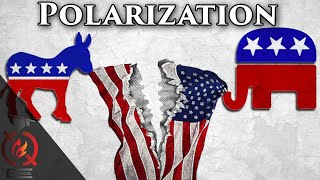
This nearly three-hour documentary traces American political polarization from the Civil Rights Acts of the 1860s through the sixth party system, and its relevance to a journalism course is structural: it demonstrates how the media ecosystem both reflects and amplifies political division. The Cynical Historian opens by noting that 'no scholar worthy of the name denies' the party realignment, and then methodically traces how sectional loyalties shifted over a century, producing a political system 'founded in partisanship more than ideology.' His treatment of how cable news, talk radio, and social media transformed political communication from occasional consumption to a '24/7 constant stream' maps directly onto Unit 6's analysis of how platforms changed news distribution and Unit 7's account of how the advertising model's collapse pushed journalism toward partisan engagement. For the capstone trilogy (Units 11-13), this video provides the political history that explains why trust in media collapsed even as journalism improved.
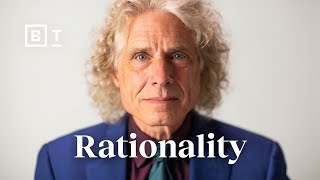
Pinker frames his entire argument around a paradox the journalism course explores across its first ten units: progress is real, the data is overwhelming, and yet public perception of the world has gotten dramatically darker. He opens by quoting Leibowitz -- 'I don't believe in anything you have to believe in' -- and then presents over a hundred graphs showing declining violence, poverty, and disease, before asking the essential question: if things are getting better, why do we think they are getting worse? His answer implicates journalism directly. The 'availability heuristic' means we judge the frequency of events by how easily examples come to mind, and news coverage systematically overrepresents violence, disaster, and failure. This is the intellectual foundation for Unit 4's treatment of selection bias and Unit 7's analysis of 'if it bleeds it leads' as a business model. Pinker also addresses conspiracy theories, stereotype formation, and the difference between legitimate skepticism and motivated reasoning -- concepts that run through Units 5 and 12.

This is the single most important documentary for this course. FRONTLINE spends six months investigating how one man's acquisition of a global communications platform reshaped public discourse, and in doing so, the film itself demonstrates the craft of investigative journalism at its highest level. Correspondent James Jacoby interviews former Twitter executives, content moderation researchers, and disinformation scholars to trace how Musk dismantled the platform's trust and safety infrastructure, reinstated banned accounts, and transformed editorial policy through personal fiat. The documentary makes visceral what the curriculum teaches abstractly across Units 5, 6, and 9: that platforms are not neutral conduits but editorial environments where decisions about content moderation, algorithmic amplification, and account verification shape what billions of people see. When researchers describe their findings that harassment increased and foreign disinformation went unchecked after the takeover, students see in real time what happens when the gatekeeping function the course examines in Unit 6 is deliberately dismantled by the gatekeeper's new owner.
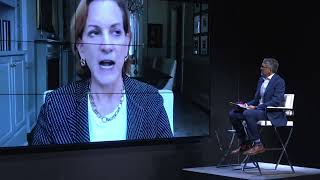
Applebaum opens this Commonwealth Club talk by describing how autocracies that share no common ideology -- Communist China, nationalist Russia, theocratic Iran -- have nonetheless built a cooperative network to undermine democratic institutions, and her central insight is that they do so primarily by poisoning information. She explains that if people are 'naturally drawn to the image of human rights, to the language of democracy, to the dream of freedom, then those ideas have to be poisoned,' and she traces the specific mechanisms: state-sponsored disinformation campaigns, the co-opting of independent media, and the strategic use of propaganda to make citizens distrust all sources of truth equally. This maps directly onto Units 5 and 9, where the curriculum examines how disinformation operates as a tool of state power and how press freedom varies across political systems. Applebaum's account of journalists murdered, imprisoned, and surveilled gives Unit 9's press freedom statistics human faces and names.

Snyder arrives at the John Adams Institute in Amsterdam straight from Davos, where he describes feeling like a 'court jester' brought in to provide 'contrast to the other various serious things -- money -- that they're talking about.' He then delivers a lecture that redefines freedom not as freedom from constraint but as freedom to create, to thrive, to take risks. His argument is essential for Unit 9 on international press freedom because he traces how authoritarian regimes -- Russia, Hungary, Poland -- systematically dismantle press freedom not through crude censorship but through ownership consolidation, advertising pressure, and the creation of parallel media ecosystems that make citizens distrust all sources equally. Snyder's concept of 'echo chambers' as deliberately engineered political instruments rather than accidental byproducts of technology provides a more sophisticated framework than the standard filter bubble narrative. For the capstone trilogy, his argument that 'the word freedom is used and abused by different people to mean very different things' connects to Unit 11's epistemological inquiry into how truth itself is constructed.
Explore These Channels
FRONTLINE does not just teach about journalism -- it IS journalism. Their investigative documentaries on platform power, disinformation, and media manipulation feature the kind of sourcing, verification, and editorial rigor that this course asks students to evaluate and emulate. For a course that treats journalism as a craft with standards, FRONTLINE provides the gold standard: students can watch the journalism they are learning about being practiced at its highest level. Their documentaries on the Twitter/X transformation, AI-generated disinformation, and political media manipulation map directly onto Units 5, 6, and 11.
Michael Stevens approaches reasoning, bias, and human cognition with a combination of intellectual rigor and visual storytelling that makes abstract concepts tangible. His explorations of confirmation bias, the argumentative theory of reasoning, and the limits of human rationality provide the cognitive science foundation that this course needs for its treatment of bias, framing, and media literacy. Vsauce videos are consistently among the highest-viewed educational content on YouTube, meaning students have likely already encountered his work -- which makes connecting his insights to journalism concepts feel natural rather than forced.
WORLD Channel's 'Pulling the Thread' documentary series is purpose-built for media literacy education. The six-episode series systematically examines conspiracy theories, conspiracy thinking, and the cognitive biases that make rational people believe irrational things. Each episode is under ten minutes, making them ideal for classroom use, while the full 'Meet the Makers' conversation provides deeper context. For a course that builds from news literacy (Unit 1) through misinformation (Unit 5) to the capstone on truth and belief (Units 11-13), this series provides a through-line that connects cognitive science to real-world information disorder.