Psychology & Behavioral Science
What is a human being, biologically? From Sapolsky's baboons to Kandel's sea slugs, this course explains behavior by zooming out from seconds (neurotransmitters) to millennia (evolution). You are your biology. Your biology is not your destiny. Hold both at once.
NOT Intro to Psych 101
This course doesn't survey psychology — it uses Robert Sapolsky and Eric Kandel as guides to ask what a human being actually is, biologically. Every unit opens with a specific experiment, a real researcher, and an uncomfortable finding.
What You Will Learn
The Biology of Behavior
Sapolsky's framework: to understand any behavior, zoom out through every timescale simultaneously — from the amygdala firing one second before, to the hormones hours before, to the childhood years before, to the evolution millennia before.
Unit 1
How You Actually Decide
Your brain uses 20 watts. A comparably capable computer would need a nuclear power plant. Heuristics are the compression algorithms that make it work — and the exploits that make you vulnerable.
Unit 7
The Social Animal
65% of ordinary Americans delivered what they believed were lethal shocks because a man in a lab coat told them to. Milgram's experiment wasn't about Germans. It was about you.
Unit 11
Curated Video Library
8 curated videos to explore — plus 13 more matched to individual units inside the course

In under five minutes, this TED-Ed animation covers the neuroscience of depression with clinical precision: smaller frontal lobes and hippocampal volumes visible on imaging, abnormal transmission of serotonin, norepinephrine, and dopamine, elevated cortisol, disrupted circadian rhythms, and the complex interaction between genes and environment. The video also makes a crucial distinction that students often miss -- the difference between 'having depression and just feeling depressed' -- and explains why it takes the average person with a mental illness over ten years to ask for help. For a course that examines the biology of behavior, this is the most efficient introduction to how mental illness manifests in brain structure and neurochemistry, connecting directly to the stress biology of Units 3 and 14 and the neurotransmitter systems discussed throughout the course.
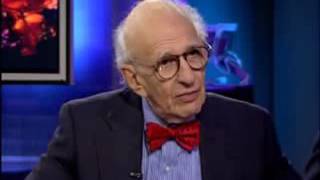
The inaugural episode of the Charlie Rose Brain Series, co-hosted by Nobel laureate Eric Kandel, sets the intellectual stage for the entire psychology course. Kandel opens by telling Charlie Rose that the questions they are approaching are 'the most profound questions Western thought has ever challenged' and that 'the mind is going to be the main focus of biological sciences in the 21st century.' The roundtable format -- with leading neuroscientists explaining perception, consciousness, and the brain-mind relationship to a lay audience -- models the exact interdisciplinary conversation this course demands. Kandel's distinction between brain and mind ('mind is a series of functions carried out by the brain -- every single thing that you and I do') is the foundational premise of Unit 1. This episode also introduces the series architecture: each subsequent episode maps to a psychology domain, from the social brain to the emotional brain to the deciding brain, making it a table of contents for the course itself.
This five-minute TED-Ed animation explains mental synthesis -- the brain's ability to combine neuronal ensembles into novel images you have never seen -- through the example of imagining a dolphin balancing a pineapple. The video introduces Hebb's principle ('neurons that fire together wire together'), explains how the prefrontal cortex coordinates firing across distant neuronal ensembles like 'a puppeteer pulling the strings,' and connects myelination to the development of imagination in childhood. For Unit 4 on neuroplasticity and Unit 5 on adolescent brain development, this video makes tangible the mechanisms the curriculum describes abstractly: synaptogenesis, myelination, and cortical coordination. At under five minutes, it is the lowest-commitment entry in the showcase -- ideal for students who need a quick visual primer before tackling the denser material on plasticity.
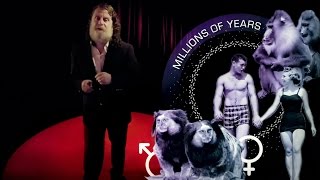
This is the ideal gateway into the entire psychology course. In fifteen minutes, Sapolsky delivers the exact multi-timescale framework that Unit 1 builds over two weeks: what was your amygdala doing one second before you pulled the trigger? What hormones were circulating hours before? What happened in your adolescence? He opens with a fantasy about capturing Hitler that is so viscerally honest -- 'sever his spine at the neck, take out his eyes with a blunt instrument' -- that students cannot look away, and then pivots to the question that organizes the whole course: 'you're not going to get anywhere if you think there's going to be the brain region or the hormone or the gene or the childhood experience that explains everything.' He covers the amygdala, the frontal cortex, testosterone, neuroplasticity, epigenetics, and the MAO-A gene-environment interaction in a single compressed arc. A student who watches this before opening the textbook will already have Sapolsky's voice in their head for the next fifteen units.
This IS the book that Units 3 and 14 are built around, delivered as a lecture by the author himself at the Beckman Institute. Sapolsky opens by asking the audience about their family history of heart disease, cancer, and high blood pressure -- hands go up everywhere -- then asks about leprosy and liver parasites, and no one raises a hand. The punchline lands perfectly: 'We don't get sick the way normal animals do. We spend 80 years having our bodies go to hell on us.' He then walks through homeostasis, the stress response, Hans Selye's accidental discovery of stress biology ('he was totally lame at handling lab rats'), and the central insight of the field: 'We turn on the exact same stress response as that zebra running for its life, and we turn it on for 30-year mortgages. That's not what it evolved for.' The lecture contains 276 keyword hits for stress, cortisol, baboons, hierarchy, immune, and hippocampus. For students in Units 3 and 14, hearing Sapolsky deliver these ideas in his own voice -- funny, profane, precise -- makes the textbook material three-dimensional.

Sapolsky delivers his signature framework in extended form: beginning with the amygdala and the question of whether a stranger is holding a gun or a cell phone, he zooms out through every timescale -- seconds (sensory environment), hours (hormones), weeks (neuroplasticity), years (adolescent development), decades (childhood and fetal life), and millennia (gene-environment interactions). The amygdala alone gets 37 mentions in the transcript. His key move is showing that aggression and fear share the same neural substrate: 'you cannot understand the first thing about the neurobiology of violence without understanding the neurobiology of fear.' He then introduces the insular cortex and its dual role in gustatory and moral disgust -- the finding that 'a single neuron in the insula cannot tell if that person has just bitten into rancid food or is contemplating the worst of human behaviors.' This lecture covers the ground of Units 1, 5, and 12, making it ideal for students who want to hear the full Sapolsky argument before the course breaks it into components.

Columbia neuroscientist Daphna Shohami explains memory to five people of increasing expertise, from a child to a fellow researcher. The progression is pedagogically brilliant: with the child, she discovers that 'your memory kept all the fun stuff' and lets go of the rest; with the teenager, she demonstrates that choosing between two equally liked candies is where 'memory is especially important because you have to come up with more information'; with the graduate student, she explores the hippocampus and amygdala in detail. The video makes tangible what Units 2 and 10 teach about memory formation -- Shohami explains that the hippocampus creates episodic memories while the amygdala tags emotional significance, which is precisely what Kandel's molecular work explains at the synaptic level. At 30 minutes, this is the most accessible entry point for students who need to see memory research as a living conversation rather than a textbook diagram.

Veritasium builds an entire episode around overconfidence bias using the collapse of Barings Bank as a narrative spine: Nick Leeson's staggering losses, his repeated doubling-down, and the 233-year-old bank's eventual destruction. But the real payload is the systematic evidence: when people say they are 90% certain, they are right only 75% of the time; professional economic forecasters who claim 53% confidence are correct just 23% of the time. The video dissects the Dunning-Kruger effect, explains why it may partly be a statistical artifact, and connects overconfidence to working memory limitations -- a study showing that as cognitive load increases, 'confidence estimates became less accurate, even for participants with higher working memory capacities.' For Units 6 and 7 on bounded rationality and heuristics, this video provides the vivid real-world cases that make Kahneman and Tversky's abstractions concrete. The Challenger disaster segment -- where engineers had just hours to present scattered data and NASA managers, 'overwhelmed by seemingly contradictory data and confident that their rocket boosters were safe,' overruled them -- is a case study students will not forget.
Explore These Channels
TED-Ed's psychology and neuroscience animations distill complex findings into three-to-five-minute visual essays that are pedagogically precise without being reductive. Their catalog covers depression, imagination, procrastination, memory, and cognitive biases -- each one a potential entry point for students who need accessible scaffolding before engaging with the course's primary-source material. The animations are particularly valuable because they visualize brain structures and neural processes that are otherwise invisible, making concepts like myelination and prefrontal cortex coordination tangible in ways that text descriptions cannot.
Crash Course Psychology
Crash Course Psychology's 40-episode series covers the entire AP Psychology curriculum in ten-minute segments with high production values and genuine intellectual rigor. The series is not a substitute for the course's Sapolsky-centered framework, but it provides the standard psychology vocabulary -- classical and operant conditioning, Piaget's stages, the DSM -- that students will encounter on standardized tests and in college intro courses. Assigning specific episodes alongside the course's more provocative units (like the replication crisis or the marshmallow test critique) gives students the orthodox version before the course complicates it.
The Charlie Rose Brain Series is a 12-episode collaboration between Charlie Rose and Nobel laureate Eric Kandel, featuring roundtable discussions with the world's leading neuroscientists on topics from memory and perception to emotion, decision-making, and mental illness. Each episode maps almost directly to a domain in this psychology course, making the series function as a parallel curriculum delivered by the researchers who produced the findings. The re-uploads on YouTube preserve these conversations after the original Charlie Rose channel was taken down. Kandel's presence as co-host means students hear from the scientist whose work on Aplysia and memory is the backbone of Units 2 and 10.