Public Health
Stewardship and Citizenship. You didn't die today. This is not luck. Behind your survival stands an invisible infrastructure of laws, institutions, surveillance systems, and collective agreements—the public health system. This course explores how it works, why it sometimes fails, and what citizenship demands of us.
NOT Biology Textbook Medicine
This course is not about how viruses work or how to eat healthier. It is about the systems, institutions, and collective decisions that determine whether populations live or die—and what citizenship means when your choices affect others.
Built on PBS's The Invisible Shield
This course is structured around the four-part PBS documentary The Invisible Shield, which traces the history of public health from quarantine to mRNA vaccines. Each module corresponds to one episode, supplemented with primary sources, data visualizations, and contemporary case studies.
Featured experts include Anthony Fauci, Tom Frieden, Sandro Galea, and many others who have shaped public health policy and research. Their voices anchor the course in the practical wisdom of people who have faced epidemics firsthand.
What You Will Learn
Invisible Infrastructure
Clean water, safe food, disease surveillance—the systems you never notice until they fail. Public health is the art of making the invisible visible.
Trust as Technology
Vaccines don't work if people don't take them. Public health requires not just science but social trust—and that trust is built or broken over generations.
Citizenship Under Contagion
Pandemics reveal what we owe each other. When your freedom to refuse a mask affects my grandmother's survival, what does citizenship demand?
Curated Video Library
11 curated videos to explore — plus 14 more matched to individual units inside the course
Michael Sandel convenes a public philosophy session at Harvard's Kennedy School just before the 2012 election, and the debate he orchestrates lands squarely on the questions Unit 16 poses about citizenship, the social contract, and the common good. He opens by asking the audience whether every American is entitled to decent healthcare regardless of ability to pay, then systematically draws out the philosophical tensions: between individual liberty and collective obligation, between earned success and structural advantage, between redistribution as moral duty and redistribution as coercion. A student named Aaron argues he should not be forced to pay for others' healthcare; a doctor's sister argues physicians are being 'punished' by the system. Sandel does not resolve these tensions -- he sharpens them, which is exactly what Unit 16 demands. For a course that builds from epidemiology through systems failure to the question of what we owe each other, this debate provides the philosophical capstone: the argument that public health is not a technical problem but an ethical one about the kind of society we choose to build.
Kurzgesagt's original 2014 immune system explainer is the visual foundation Unit 4 needs before vaccination makes sense. In under eight minutes, the animation walks through the same innate-versus-adaptive structure the unit's immune system primer teaches -- phagocytes and macrophages as fast, general-purpose responders; B cells, T cells, and antibodies as the slower, specific system that has to be taught what to look for -- but does it visually, with a bacterial invasion rendered as a battlefield instead of a diagram. With over 54 million views, it is one of the most-watched biology explainers ever made, and its central image (the immune system as an army that has never seen this particular enemy before) sets up exactly the problem vaccines solve: how do you get that army trained without waiting for a real, dangerous infection to teach it the hard way.
Peter Piot co-discovered the Ebola virus in 1976 and went on to lead UNAIDS through the global HIV/AIDS crisis. In this Royal Institution lecture delivered before COVID-19, he walks through the history of pandemic threats -- from his own experience rushing to a remote village in Zaire where an unknown virus was killing patients and healthcare workers, through SARS, MERS, and Zika -- and explains why the world remains structurally unprepared for the next emergence. Piot's authority is unique: he has personally battled zoonotic spillover, built international surveillance networks, and navigated the politics of pandemic response across four decades. His argument that pandemic preparedness requires not just stockpiles but trust, infrastructure, and political will maps directly onto the course's arc from Unit 14's treatment of zoonotic origins through Unit 15's analysis of why preparedness indices failed. When he describes arriving at that village in 1976 and finding a nun's thermos containing blood samples with an unknown pathogen, students will understand that the next pandemic is not hypothetical -- it is a pattern with documented precedents.
Unit 4 closes with vaccine hesitancy, and this video is the single best complement to that section because it does not dismiss the concern -- it quantifies it. Kurzgesagt walks through real vaccine side effect rates (including the fraudulent autism study and why it was retracted) alongside the actual risks of the diseases vaccines prevent, then makes the comparison explicit: side effects are real, documented, and almost always far smaller than the risk of the disease itself. At nearly 18 million views, it is the rare pro-vaccination video candid enough to name genuine, rare adverse events by name rather than waving them away, which is precisely the 'acknowledging real vaccine risks while contextualizing them' approach the unit's section on responding to hesitancy recommends. It gives students a concrete numeric answer to the question the unit poses but does not fully quantify: how high, actually, is the risk?

This short but devastating FRONTLINE documentary follows public health workers battling Ebola in the Democratic Republic of Congo, where the outbreak was compounded by armed conflict, community distrust, and the destruction of health infrastructure. The film shows what happens when the concepts this course teaches abstractly -- surveillance systems, contact tracing, trusted messengers, community health workers -- collide with the reality of a war zone where vaccination teams are attacked and burial practices that spread disease are also expressions of grief and cultural identity. For Units 9 and 12, the documentary's depiction of health workers earning community trust through persistent presence, not through top-down mandates, illustrates exactly why trusted messengers matter more than expert authority. For Unit 14, it shows zoonotic spillover not as a theoretical risk but as an active emergency. At just over twenty minutes, it is the shortest showcase entry and an ideal gateway for students who need to see public health in action before they engage with the curriculum's structural analysis.
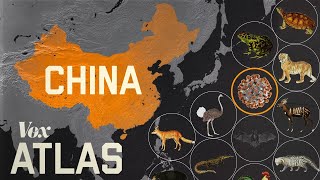
Vox traces the chain from wildlife markets in southern China to the emergence of SARS-CoV-2, using satellite imagery, supply chain analysis, and interviews with virologists to show how the global wildlife trade creates the conditions for zoonotic spillover. The video explains that wet markets are not inherently dangerous -- the risk comes specifically from the proximity of live wild animals from different ecosystems, stressed and immunocompromised, in conditions where viruses can jump between species and then to humans. With 23 million views, it shaped how an entire generation understood the origins of the pandemic. For Unit 14, this video provides the concrete visual evidence of how deforestation, habitat destruction, and wildlife trade create pandemic risk -- not as abstract ecological theory but as a traceable supply chain from forest to market to hospital. At under nine minutes, it pairs perfectly with the unit's opening on the pattern of zoonotic emergence.
Based on Atul Gawande's landmark book, this FRONTLINE documentary examines how modern medicine handles aging and death -- and how badly it often fails. Gawande, a surgeon, follows patients and families navigating end-of-life decisions in a healthcare system designed to treat disease rather than preserve what patients actually value: autonomy, dignity, connection. The documentary is essential context for Unit 13's treatment of deaths of despair and the social determinants of health, because it reveals that the American healthcare system's failures are not limited to the uninsured or the marginalized. Even with the best insurance and access to world-class hospitals, the system routinely prioritizes intervention over wellbeing, treatment over comfort, and survival over quality of life. With 6 million views, it is among the most-watched FRONTLINE documentaries ever produced, and it asks the question that sits beneath the entire course: is the goal of public health to maximize lifespan, or to enable lives worth living?
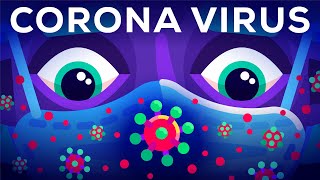
Kurzgesagt published this video in March 2020, and with nearly 90 million views it became the most-watched science explainer of the pandemic. In under nine minutes, the animation team distills the biology of SARS-CoV-2 -- how the spike protein binds to ACE2 receptors, how the immune system mounts a response, why some infections overwhelm the lungs while others remain mild -- into visuals that make immunology intuitive. The video then pivots from biology to public health, explaining flattening the curve not as a policy slogan but as a mathematical reality: the same number of infections spread over more time means fewer people competing for the same hospital beds. This bridges Unit 4's treatment of how vaccines work with the immune system and Unit 6's mathematical modeling of outbreak dynamics. For students who need a concrete, visual foundation before engaging with the curriculum's deeper analysis, this is the ideal starting point -- short enough to assign as homework, rigorous enough to build on.
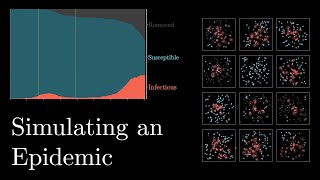
Grant Sanderson -- the mathematician behind 3Blue1Brown -- built this simulation in March 2020 as COVID-19 was spreading globally, and it remains the single best visual explanation of epidemic dynamics ever produced for a general audience. He constructs a population of bouncing dots, introduces infection through contact, and then systematically varies parameters: transmission rate, recovery time, social distancing, quarantine compliance, travel between communities. Students watch in real time as small changes in a single parameter -- reducing the probability of transmission from 0.2 to 0.1 -- transform an exponential explosion into a manageable curve. This is Unit 6's SIR model made visceral. The video also demonstrates the counterintuitive lesson that early interventions look like overreactions because their success makes the counterfactual invisible -- precisely the paradox of prevention that Unit 1 introduces. At 23 minutes, it is mathematically rigorous enough to satisfy the quantitative units while remaining accessible to students encountering exponential growth for the first time.
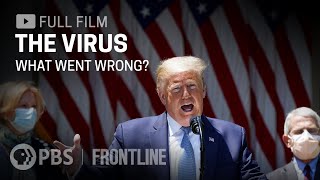
This is the single most important documentary for this course. FRONTLINE traces the first ninety days of America's COVID-19 response, interviewing the actual public health officials, scientists, and policymakers who were in the room when critical decisions were made -- and unmade. The documentary opens with the CDC's initial confidence in its testing capacity and then methodically documents how that confidence collapsed: contaminated test kits, bureaucratic delays, a surveillance system blind to community spread, and political leadership that publicly contradicted its own health agencies. What makes this essential viewing is not the political theater but the systems failure. Students will see every concept from Units 7, 8, and 15 -- disease surveillance, federalism's fragmentation of public health authority, and the gap between preparedness rankings and actual pandemic performance -- playing out in real time with real consequences. When your student reads that the U.S. ranked number one in pandemic preparedness in 2019, they will already have watched this documentary and understood why that ranking predicted almost nothing about actual outcomes.
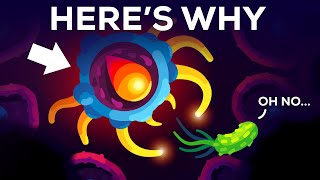
This 2021 Kurzgesagt video picks up exactly where the bacteria-infection explainer leaves off: it is built entirely around immune memory, the mechanism vaccines exploit. Where the unit quotes Philipp Dettmer's book Immune describing memory cells as 'cellular librarians that archive information about the enemy,' this video is Dettmer's team dramatizing that same idea at feature length -- showing why a body that has already met a pathogen (or a vaccine's harmless stand-in for one) can clear a second exposure before symptoms even appear. It never uses the word 'vaccine' in its title, but its subject is the exact biological fact that makes vaccination possible, and it pairs with the bacteria-infection video as a two-part foundation: first, how the immune system fights an unfamiliar invader; second, why it never has to fight that invader unprepared again.
Explore These Channels
FRONTLINE has produced the definitive documentary investigations of every major public health crisis of the past two decades. Their health documentaries -- including The Virus: What Went Wrong?, Ebola in Congo, and Being Mortal -- feature extensive interviews with the actual epidemiologists, public health officials, and frontline healthcare workers who shaped these responses. For a course that treats public health as a system of institutions, incentives, and trust rather than a collection of medical interventions, FRONTLINE's investigative journalism provides the kind of primary-source testimony that textbooks cannot replicate. Their COVID-era documentaries are especially valuable because they document the real-time collapse of systems the curriculum analyzes structurally.
Kurzgesagt's science animations are the gold standard for making complex biological and epidemiological concepts accessible to a general audience. Their videos on the immune system, vaccination, antibiotic resistance, and pandemic dynamics have collectively been viewed hundreds of millions of times, and they maintain scientific rigor through a dedicated fact-checking team. For a public health course that must teach immunology, epidemiology, and disease transmission to students without science backgrounds, Kurzgesagt provides the visual scaffolding that makes abstract mechanisms concrete. Their pandemic-era output is particularly valuable because it was produced under real-time scientific uncertainty and models how to communicate evolving evidence honestly.
Grant Sanderson's mathematical visualization channel produced the definitive epidemic simulation during COVID-19 and has additional content on exponential growth, probability, and data visualization that directly supports the quantitative units of this course. His approach -- building mathematical intuition through interactive simulations rather than equations -- is perfectly suited for a public health course where students need to understand why exponential growth surprises us, how small parameter changes transform outbreak trajectories, and why flattening the curve is a mathematical statement rather than a political slogan. The channel's emphasis on visual proof complements Unit 5's treatment of John Snow's map as 'an argument rather than just a picture.'