Skip to content
Interdisciplinary CurriculumCurriculum

Your learning stays with you.

Support Independent Learning
Purchase Terms

© 2026 Commensurate Ventures. All rights reserved.

Interdisciplinary CurriculumCurriculum
All Courses

The Architecture of Money

A History of Financial Markets. Financial markets are human inventions with specific histories. Understanding how they emerged, why they take their current form, and whose interests they serve provides intellectual tools beyond basic financial literacy.

17 Units
2-3 weeks per unit
Curriculum Map

What You Will Learn

Historical Contingency

Every financial instrument and institution was invented at a specific time by specific people facing specific problems.

Power Analysis

Who benefits from current arrangements? Whose interests shaped these institutions? What alternatives were foreclosed?

Pattern Recognition

Financial crises follow recurring patterns. Understanding history provides analytical tools for contemporary events.

Curated Video Library

8 curated videos to explore — plus 14 more matched to individual units inside the course
Conversations With History: The Ascent of Money
56m
lecture
Conversations With History: The Ascent of MoneyYouTube
University of California Television (UCTV)·Dec 2008(17 years ago)·101K views

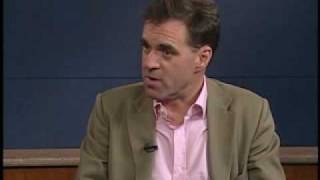
Niall Ferguson sits down at Berkeley and walks through the entire arc of this course in a single hour. He explains that he wrote The Ascent of Money because he 'started to sense that a big financial crisis was coming' while 'euphoria was reaching its zenith and people would tell me at conferences that there would never be another recession.' Ferguson's core argument -- that financial history makes crises comprehensible in a way that flowcharts and equations never can -- is exactly the pedagogical premise of this course. He traces John Law's Mississippi Bubble through the Minsky framework of displacement, euphoria, and panic, and explains why the ascent of money is 'ironically' titled because the climb is 'extraordinarily bumpy, punctuated by really major setbacks.' This interview is the ideal orientation video: it previews the entire course's narrative structure from the invention of money through securitization and credit default swaps.
bubbleeuphoriadisplacementsecuritization+4 more
Who Controls All of Our Money?
22m
explainer
Who Controls All of Our Money?YouTube
ColdFusion·Jun 2017(9 years ago)·7.3M views

This ColdFusion video opens with Henry Ford's warning that if people understood the banking system 'there would be a revolution before tomorrow morning,' and then delivers a tightly edited 21-minute history of central banking from the Bank of England's founding in 1694 through the secret Jekyll Island meeting that created the Federal Reserve. The video covers exactly the same ground as Units 2 and 5 -- how the Bank of England was created to finance war, how fractional reserve banking works, and how the Fed was designed by the very bankers it was supposed to regulate. For students encountering these ideas for the first time, this is ideal scaffolding: it names the gold standard, floating exchange rates, and reserve currency status in accessible visual language before the curriculum demands deeper analysis. It is also the shortest video in the showcase, making it a low-commitment entry point.
bubblefloating exchange ratereserve currencygold standard+1 more
Mark Blyth - Global Trumpism and the Future of the Global Economy
1h 40m
lecture
Mark Blyth - Global Trumpism and the Future of the Global EconomyYouTube
McMaster Humanities·Jul 2019(7 years ago)·310K views

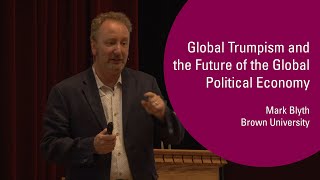
Mark Blyth is the intellectual backbone of this course -- his framework of austerity as a 'dangerous idea' and his analysis of how macroeconomic policy failures produce populist backlash runs through multiple units. In this McMaster lecture, he explains the rise of global populism through an ingenious computer metaphor: every country has the same 'hardware' (capital, labor, institutions) but runs different 'software' (policy regimes), and the neoliberal operating system has been crashing everywhere simultaneously. His account of how quantitative easing enriched asset holders while wages stagnated -- and how that asymmetry produced Trump, Brexit, and the Five Star Movement -- is essential context for Units 5, 6, and 12. Blyth is also genuinely funny, which matters: students who might tune out a dry lecture on monetary policy will stay for his description of bond market conferences charging five thousand dollars admission.
austeritycapitalismquantitative easingliquidity+2 more
Can we Fix Capitalism? Yanis Varoufakis vs Gillian Tett
1h 27m
debate
Can we Fix Capitalism? Yanis Varoufakis vs Gillian TettYouTube
Intelligence Squared·Oct 2021(4 years ago)·508K views

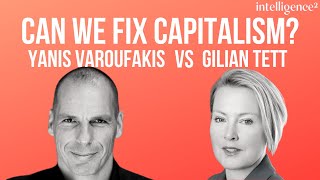
This debate at Union Chapel pits a former Greek finance minister against the Financial Times' chair in a structured argument about whether capitalism is reformable or already dying. Varoufakis opens with a genuinely original thesis: we are living through a moment analogous to the 1790s, when feudalism was still dominant but pockets of capitalism were emerging beneath it. He argues that capitalism is 'overthrowing itself' as profit ceases to be the primary engine of accumulation, replaced by what he calls 'technofeudalism.' Gillian Tett counters with a pragmatic defense of market reform. The debate format models exactly the kind of structured argumentation this course demands, and the specific concepts -- quantitative easing, austerity, arbitrage, the eurozone crisis -- map directly onto Units 5, 6, 7, and 12. When the audience votes at the start and again at the end, students see minds changing in real time.
capitalismquantitative easingarbitrageausterity+2 more
Principles for Dealing with the Changing World Order by Ray Dalio
44m
explainer
Principles for Dealing with the Changing World Order by Ray DalioYouTube
Principles by Ray Dalio·Mar 2022(4 years ago)·150.0M views

Ray Dalio condenses 500 years of imperial rise and decline into 43 minutes, and does it through the lens of reserve currencies and debt cycles -- the exact framework this course builds across Units 5 through 8. He opens with a story students will not forget: in 1971, he watched on TV as Nixon broke the dollar's link to gold, expected the stock market to crash, and instead saw it surge 25%. He then discovered the same thing happened in 1933. This pattern -- that currency devaluations consistently boost asset prices while eroding purchasing power -- is the empirical backbone of the course's treatment of the gold standard, Bretton Woods, and floating exchange rates. Dalio's visualization of how the Dutch guilder gave way to the British pound and then the dollar, each following the same arc of reserve currency privilege followed by over-borrowing and decline, gives students a mental model they will carry through every subsequent unit.

reserve currencybubbledefaultmedium of exchange+1 more
What is money and who rules the world? | Yanis Varoufakis
1h 3m
lecture
What is money and who rules the world? | Yanis VaroufakisYouTube
Escaped Sapiens·Dec 2022(3 years ago)·545K views

Varoufakis opens this conversation by comparing money to light in physics -- it has two natures that seem 'absolutely incompatible with one another,' yet money is both a commodity and a transferable form of debt. He then walks through the archaeological evidence from Mesopotamia showing that the first money was clay tablets recording debts, not coins facilitating barter, which is precisely the argument David Graeber makes in Unit 1. This is the single best video companion for the opening unit because Varoufakis explains the debt-versus-commodity theory of money in a conversational register that students can absorb before tackling Graeber's more academic prose. When he describes how Mesopotamian workers received clay shards with numbers that they could trade among themselves -- and how this is how writing and accounting were both invented -- the abstract concept of money as 'a creature of law and political authority' becomes concrete.
capitalismausterityliquidityquantitative easing+2 more
Age of Easy Money (full documentary) | FRONTLINE
1h 53m
documentary
Age of Easy Money (full documentary) | FRONTLINEYouTube
FRONTLINE PBS | Official·Mar 2023(3 years ago)·21.0M views

This is the single most important documentary for this course. FRONTLINE traces the Federal Reserve's quantitative easing experiment from the 2008 crisis through the SVB collapse, interviewing the actual people who designed and managed the program. Andrew Hussar, the Fed official who ran the bond-buying operation, describes being asked to manage 'the largest financial markets intervention by government in world history' and his growing horror as Wall Street pocketed the money instead of lending it. The documentary makes visceral what the curriculum teaches abstractly: that central banks are political institutions whose emergency measures created a decade of asset inflation that benefited the already wealthy while ordinary Americans saw stagnant wages and rising costs. When your student reads about moral hazard and quantitative easing in Units 5 and 12, they will already have Jerome Powell's Jackson Hole speech in their head -- the moment he told markets 'these are the unfortunate costs of reducing inflation' and watched the Dow plunge.

quantitative easingmoral hazardshadow bankingbubble+4 more
You Are Witnessing the Death of American Capitalism
43m
explainer
You Are Witnessing the Death of American CapitalismYouTube
Benn Jordan·Mar 2025(1 year ago)·5.2M views

Benn Jordan is a musician with no formal economics education who started a private fund that shorted companies he knew professionally -- and then got hired as a freelance consultant by venture capital firms. His outsider perspective produces a uniquely accessible explainer on how capitalism's own metrics show it failing. He traces the concept of 'velocity of money' through a farmer-and-mechanic thought experiment, explains how interest rate manipulation distorts the relationship between labor and capital, and uses a Coke Zero purchasing-power index to demonstrate that a minimum-wage worker in Iowa suffered a 49% real wage cut between 2019 and 2025 while a passive index fund investor gained free soda. This video is ideal for Units 9 and 10 because it makes the abstract shift from productive capitalism to financialized capitalism viscerally personal, and it does so in the language of a generation that grew up watching their parents' purchasing power evaporate.

capitalismprivate equityventure capitalbubble

Explore These Channels

FRONTLINE PBS | Official
~8h

FRONTLINE has produced the definitive documentary investigations of every major financial crisis of the past two decades. Their finance documentaries -- including Age of Easy Money, Money Power and Wall Street, and The Warning -- feature extensive interviews with the actual regulators, traders, and officials who shaped these events. For a course that treats financial markets as political institutions, FRONTLINE's investigative journalism provides the kind of primary-source testimony that textbooks cannot replicate.

Covers 3 units in this course
Principles by Ray Dalio
~4h

Ray Dalio's channel translates decades of macroeconomic research at Bridgewater Associates into animated explainers that visualize long-run cycles of empire, debt, and currency. His 'How the Economic Machine Works' and 'Principles for Dealing with the Changing World Order' series provide the kind of data-rich, historically grounded frameworks that complement this course's emphasis on pattern recognition across centuries. Students benefit from seeing a practitioner -- someone who manages money based on these historical patterns -- explain why history matters for understanding markets.

Covers 3 units in this course
Intelligence Squared
~6h

Intelligence Squared hosts structured Oxford-style debates between leading economists, historians, and public intellectuals on exactly the questions this course poses: Can capitalism be fixed? Is inequality inevitable? Should central banks be independent? The debate format models the kind of rigorous argumentation the course demands, and the audience vote before and after each debate makes persuasion visible. Their finance-adjacent debates feature regular appearances by Yanis Varoufakis, Gillian Tett, and other voices students will encounter in the curriculum.

Covers 3 units in this course

All Units

1
2-3 weeks
The Invention of Money
Everything you learned about the origins of money is probably wrong. The barter myth serves ideological purposes, obscuring how money has always been a tool of political power.
  • •Understand that money is a social technology, not a natural phenomenon
  • •Analyze the political and power dynamics embedded in monetary systems
  • •Evaluate the ideological claims behind gold standard nostalgia and cryptocurrency hype
  • +1 more objectives
Start learning
2
2-3 weeks
The Birth of Banking
The Medici did not invent banking because they were geniuses. They invented it because they needed to evade usury laws while financing political power. The innovations that made them rich also made the financial system inherently unstable.
  • •Understand how lending money evolved into a business with social, religious, and political dimensions
  • •Analyze the innovations of medieval and Renaissance banking and their contemporary parallels
  • •Evaluate the inherent instabilities in fractional reserve banking
  • +1 more objectives
Start learning
3
2-3 weeks
The First Securities Markets
The stock market was not invented to democratize wealth. It was invented to finance imperialism. Understanding the VOC reveals how securities markets have always served concentrated power while promising broad participation.
  • •Understand why the Dutch invented the stock market and what institutional infrastructure made it possible
  • •Analyze how early securities innovations (short selling, options, futures) created both opportunities and risks
  • •Evaluate the legal and political foundations necessary for securities markets to function
  • +1 more objectives
Start learning
4
2-3 weeks
Bubbles, Manias, and Crashes
Every generation believes it has transcended the follies of its predecessors. Every generation is wrong. The pattern of boom and bust is not a bug in capitalism; it is a feature that no amount of sophistication seems able to eliminate.
  • •Understand the psychological and social dynamics that create speculative bubbles
  • •Analyze historical bubbles from Tulip Mania to the dot-com crash using Kindleberger's framework
  • •Evaluate why warnings are systematically ignored and why 'this time is different' thinking persists
  • +2 more objectives
Start learning
5
2-3 weeks
Central Banking and the Lender of Last Resort
Central banks are presented as technocratic institutions above politics. They are not. They are deeply political creations that serve particular interests while claiming neutrality.
  • •Understand why central banks emerged as political institutions managing monetary systems
  • •Analyze Bagehot's dictum and the theory of lender of last resort functions
  • •Evaluate claims of central bank independence and their political implications
  • +1 more objectives
Start learning
6
2-3 weeks
The Bond Market and Sovereign Debt
Bond markets are presented as neutral arbiters of fiscal responsibility. In reality, they are political instruments that enforce particular ideologies about what governments should and should not do.
  • •Understand how sovereign borrowing developed from war finance to modern debt markets
  • •Analyze the political economy of bond markets and their influence on government policy
  • •Evaluate claims about 'bond vigilantes' and market discipline on sovereign borrowers
  • +1 more objectives
Start learning
7
2-3 weeks
When Great Powers Default
Sovereign default is treated as catastrophic and unthinkable. History shows it is neither. Understanding what actually happens when great powers default reveals much about power, morality, and the international order.
  • •Understand how major nations have defaulted throughout history and what happened afterward
  • •Analyze the political and economic causes of sovereign default beyond simple overspending
  • •Evaluate the role of international institutions in managing debt crises and whose interests they serve
  • +1 more objectives
Start learning
8
2-3 weeks
Foreign Exchange and Currency Systems
Currency systems are presented as technical arrangements managed by experts. They are political constructions that determine winners and losers, constrain policy choices, and distribute power internationally.
  • •Understand the historical evolution of international monetary systems from gold to floating rates
  • •Analyze why exchange rate regimes consistently fail or require transformation
  • •Evaluate the political economy of currency systems and whose interests they serve
  • +1 more objectives
Start learning
9
2-3 weeks
The Corporation as Legal Technology
The corporation is humanity's most successful legal technology for concentrating capital and diffusing risk. Understanding its evolution reveals how legal fictions become political realities.
  • •Understand how limited liability transformed capital formation and risk distribution
  • •Analyze the evolution of corporate personhood from legal fiction to political force
  • •Evaluate how regulatory arbitrage shapes corporate behavior and location
  • +1 more objectives
Start learning
10
2-3 weeks
Private vs. Public Markets
The shift from public to private markets represents one of the most significant transformations in American capitalism, concentrating wealth-building opportunities among the already wealthy.
  • •Understand the historical role of public markets in democratizing capital formation
  • •Analyze why companies increasingly stay private longer
  • •Evaluate how private market wealth concentration affects economic inequality
  • +1 more objectives
Start learning
11
2-3 weeks
Asset Classes and Portfolio Theory
Modern portfolio theory promised to make investing scientific and accessible. Its actual history reveals more about the limits of financial expertise than its power.
  • •Understand the theoretical foundations of modern portfolio theory
  • •Analyze the gap between academic finance theory and practical outcomes
  • •Evaluate how passive investing has transformed asset management
  • +1 more objectives
Start learning
12
2-3 weeks
Credit Cycles and Financial Instability
Stability breeds instability. The economists who understood this were ignored until it was too late.
  • •Understand Minsky's financial instability hypothesis and its predictive power
  • •Analyze how credit cycles progress from hedge to speculative to Ponzi finance
  • •Evaluate the 2008 financial crisis as a case study in systemic failure
  • +1 more objectives
Start learning
13
2-3 weeks
Arbitrage, Efficiency, and Market Structure
The efficient market hypothesis promised rational prices. Reality delivered flash crashes, meme stocks, and a system where you are the product.
  • •Understand the efficient market hypothesis and its theoretical foundations
  • •Analyze behavioral finance challenges to market efficiency
  • •Evaluate how high-frequency trading and payment for order flow reshape market structure
  • +1 more objectives
Start learning
14
2-3 weeks
The Future of Finance
Every financial innovation solves a problem and creates new ones. As we stand at the threshold of programmable money, algorithmic markets, and climate finance, history offers us the only guide we have.
  • •Understand how emerging financial technologies represent both solutions and new problems
  • •Analyze the implications of Central Bank Digital Currencies for monetary sovereignty and privacy
  • •Evaluate cryptocurrency claims against historical patterns of monetary innovation
  • +2 more objectives
Start learning
15
2 weeks
Environmental Economics: Pricing the Priceless
Economics is the study of scarcity, yet for two centuries it treated nature as infinite. In this unit, we explore the most dangerous accounting error in history: the failure to put a price on the planet.
  • •Understand the concept of 'Negative Externality' as a market failure
  • •Analyze historical examples of resource extraction bubbles
  • •Evaluate market-based vs. regulatory solutions to environmental collapse
Start learning
16
Free3-5 days
Case Study: Who Owns the Conversation?
When a $111 billion media merger is justified by 'synergy' and 'transaction cost reduction,' Mark Blyth's question is whether the economic ideas are neutral analysis or institutional weapons — and whether the consolidated media entity becomes the vehicle for propagating the very narrative that justified its creation.
  • •Apply Blyth's 'ideas as institutional weapons' framework to analyze how economic narratives like 'synergy' justify media consolidation
  • •Use Damodaran's narrative-and-numbers framework to forensically evaluate whether the deal's financial claims survive scrutiny
  • •Evaluate the merger's democratic consequences through Habermas's public sphere concept and Fraser's subaltern counterpublics
Start learning
17
Free3-5 days
Case Study: The Century Bond and the Three-Year GPU
When 100-year financial instruments fund hardware with a 3-year useful life, Frank Knight's distinction between risk and uncertainty stops being abstract — and the question is not whether the AI bubble will pop, but whether the system even knows it's making a bet.
  • •Apply Knight's risk-uncertainty distinction to evaluate whether AI infrastructure debt is priced as calculable risk or genuine uncertainty — and connect this to Bayesian inference to identify where probabilistic reasoning breaks down
  • •Use Luhmann's functional differentiation to explain why the financial system cannot evaluate the scientific wager embedded in AI infrastructure bonds
  • •Use Damodaran's narrative-and-numbers framework to forensically evaluate whether the $650 billion revenue projection survives contact with historical base rates
  • +2 more objectives
Start learning

An open educational resource. Draws on economic history, sociology, and political economy to understand financial markets.